The Status and Importance of Parents
The Status and Importance of Parents in Islam – Rights of Parents According to the Quran and Hadith
Islam: A Complete Code of Life and the Rights of Parents
Islam is a complete code of life that teaches humanity how to fulfil the rights of Allah Almighty and the rights of His creation. Along with establishing a strong relationship with Allah through sincere worship and obedience, Islam places great importance on maintaining good relationships with other human beings. Among all human relationships, the relationship with parents holds a particularly honoured and respected position.
Parents are the means through which a person enters this world. They sacrifice their comfort, happiness, time, and resources to raise their children and provide them with love, care, and protection. Recognizing these sacrifices, Islam repeatedly commands Muslims to treat their parents with kindness, respect, compassion, and humility.
The importance of parents in Islam is evident from the fact that Allah Almighty has mentioned kindness towards parents alongside the command to worship Him alone. This demonstrates the elevated status of parents and the great responsibility children have towards them.
The Rights of Parents in the Holy Quran
The command to treat parents kindly is not exclusive to the Ummah of Prophet Muhammad (peace and blessings be upon him). Previous nations were also instructed to respect and care for their parents. The Holy Quran mentions the covenant taken from the Children of Israel:
“And when We took a firm covenant from the Children of Israel that you would worship none but Allah and show kindness to parents.”
Surah Al-Baqarah (2:83)
This verse highlights that respecting parents and treating them well has always been an important commandment in divine teachings.
Similarly, Allah Almighty has provided detailed guidance to Muslims regarding the treatment of parents, particularly when they reach old age. The Quran does not merely command kindness; it also teaches children how to speak to their parents and behave towards them.
Allah Almighty says in Surah Al-Isra:
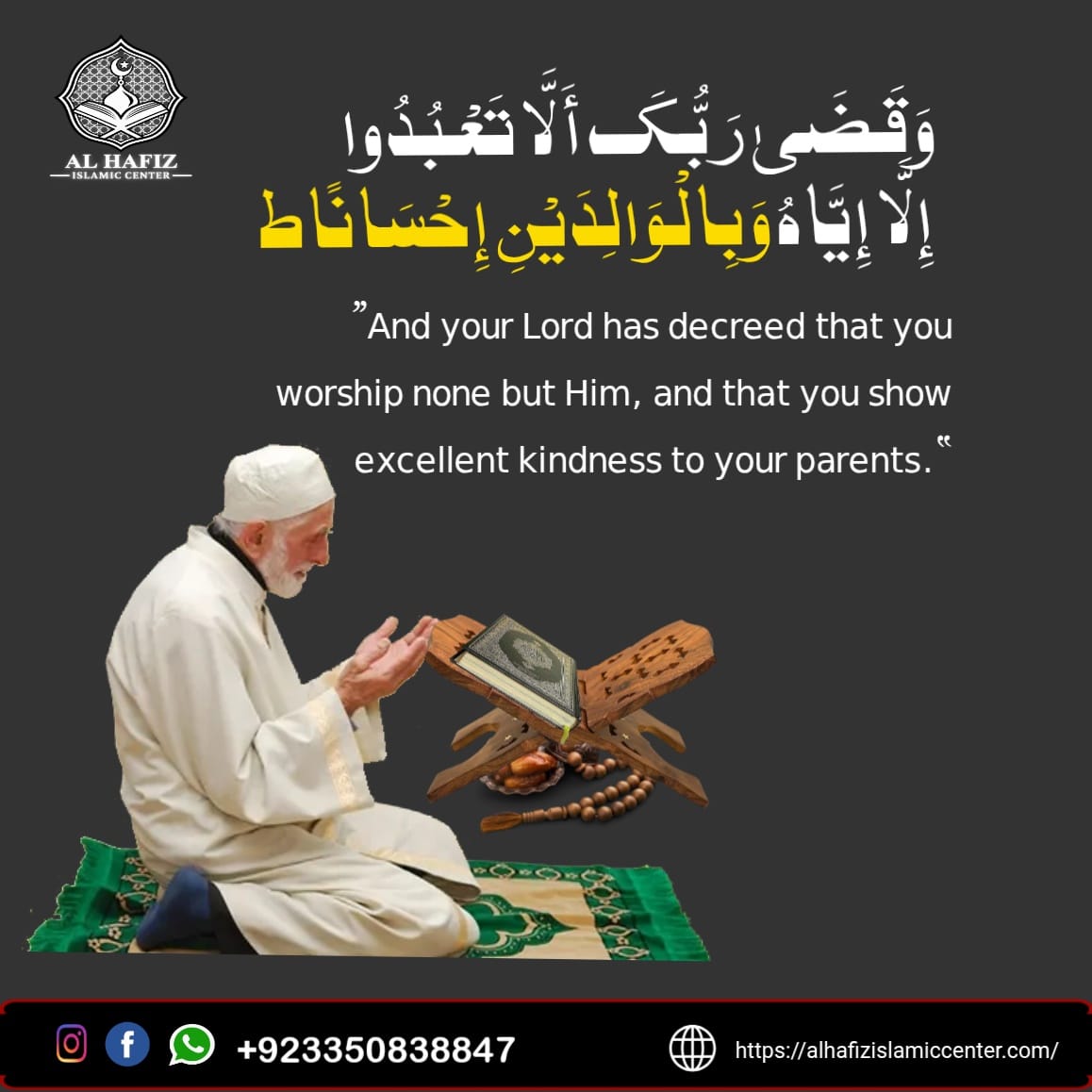
“And your Lord has decreed that you worship none but Him and treat your parents well. If one or both of them reach old age during your lifetime, do not even say ‘uff’ to them, do not scold them, and speak to them respectfully.”
Surah Al-Isra (17:23)
This verse establishes the importance of parents in Islam by placing their rights immediately after the command to worship Allah alone.
It teaches us that children must never speak harshly to their parents, insult them, or express frustration towards them. Even a small expression of irritation, such as saying “uff”, has been prohibited.
Children should remember that their parents are the people who endured countless difficulties to raise them. They sacrificed their own comfort, happiness, and personal desires to provide their children with a better future.
Showing Respect, Humility, and Compassion to Parents
Allah Almighty further commands believers not to display arrogance or superiority before their parents. Instead, children should lower themselves before their parents with humility, love, and compassion.
When you were a small child, you could not even protect yourself from a fly or put a morsel of food into your mouth. Your parents carried you, cared for you, turned you from one side to another, prepared your food, and fulfilled your needs.
Today, when Allah has granted you strength, knowledge, wealth, and independence, you should remember those sacrifices and serve your parents with the same love and compassion.
The Holy Quran teaches believers a beautiful supplication for their parents:
“And lower to them the wing of humility and compassion, and say: My Lord, have mercy upon them just as they brought me up when I was small.”
Surah Al-Isra (17:24)
This Quranic supplication reminds Muslims that caring for parents is not simply a social responsibility; it is an act of obedience to Allah Almighty.
Every Muslim should regularly make this dua for their parents and ask Allah to forgive them, bless them, and grant them His mercy.
Kindness Towards Parents Even When They Have Different Beliefs
Islam commands Muslims to maintain kindness and good behaviour towards their parents, even if their parents are not Muslims.
However, obedience to parents is not absolute. If parents instruct their children to associate partners with Allah or commit an act of disobedience to Him, children must not obey that particular instruction.
Nevertheless, even in such circumstances, Islam teaches children to maintain respectful behaviour and deal with their parents through kindness and good manners.
Allah Almighty says:
“And if they pressure you to associate with Me that of which you have no knowledge, then do not obey them, but treat them kindly in this world.”
Surah Luqman (31:15)
This verse clearly establishes an important Islamic principle: disobedience to parents in matters involving disobedience to Allah does not permit children to abandon kindness, respect, and compassion towards them.
The Status of Mother in Islam – Why Does Islam Emphasize Her Rights?
Although both parents have an extremely high status in Islam, the mother has been given special emphasis regarding good treatment and companionship.
This distinction can be understood from the teachings of the Holy Quran and the Hadith of Prophet Muhammad (peace and blessings be upon him).
A mother carries her child in her womb for approximately nine months, experiences the pain of childbirth, and undertakes the demanding responsibility of breastfeeding and raising the child. Her sacrifices and hardships are among the reasons the Prophet (peace and blessings be upon him) repeatedly emphasized her rights.
Once, a man asked the Messenger of Allah (peace and blessings be upon him) who was most deserving of his good companionship.
The Prophet Muhammad (peace and blessings be upon him) replied:
“Your mother, then your mother, then your mother, then your father, and then the one who is nearest to you in kinship, followed by the one who is next nearest.”
Sahih Muslim – Book of Virtue, Maintaining Family Ties and Good Manners – Hadith 6501
This beautiful Hadith emphasizes the elevated position of the mother and reminds Muslims that she deserves exceptional love, care, respect, and companionship.
The Importance of Father in Islam
Giving special importance to the mother does not mean that the rights of the father are any less significant. Islam also emphasizes the father’s honour, respect, and obedience in matters permitted by Islamic teachings.
The father works hard, carries family responsibilities, and makes countless sacrifices to provide for his children. Therefore, children must respect their fathers, listen to their advice, and make every effort to keep them happy.
The Messenger of Allah (peace and blessings be upon him) said:
“The pleasure of the Lord lies in the pleasure of the father, and the displeasure of the Lord lies in the displeasure of the father.”
Sunan al-Tirmidhi – Book of Righteousness and Maintaining Family Ties – Hadith 1900
This Hadith highlights the significance of maintaining a good relationship with one’s father and fulfilling his rights.
Muslims should understand that both parents deserve kindness and respect. A person should never neglect the rights of one parent while fulfilling the rights of the other.
How to Treat Parents According to Islam
The teachings of the Quran and Sunnah provide practical guidance for fulfilling the rights of parents. Every Muslim should make a sincere effort to:
- Speak to parents respectfully and avoid harsh words.
- Never insult, humiliate, or embarrass them.
- Listen to their advice and obey them in matters permitted by Islam.
- Serve them with love, especially when they become elderly.
- Provide financial and emotional support according to their needs and one’s ability.
- Make regular dua for their health, protection, forgiveness, and mercy.
- Avoid actions that cause them unnecessary pain or distress.
- Maintain good relationships with their relatives and friends.
- Show patience and compassion when they need care and assistance.
- Never consider serving parents a burden or inconvenience.
Remember that parents are among the greatest blessings of Allah Almighty. Their presence should be valued, and their rights should never be neglected.
How to Honour Parents After Their Death in Islam
Those whose parents are alive should consider their presence a precious blessing from Allah Almighty. However, those whose parents have passed away should not think that their responsibility towards them has ended.
Islam teaches several ways through which children can continue to show kindness to their deceased parents.
These include:
- Making regular dua for their forgiveness and mercy.
- Asking Allah Almighty to grant them a high status in Jannah.
- Paying any outstanding debts they left behind.
- Fulfilling their lawful wishes and commitments.
- Distributing their inheritance according to Islamic principles.
- Maintaining good relationships with their relatives and close associates.
- Giving charity on their behalf.
- Supporting charitable and welfare projects in their name.
- Arranging drinking water facilities, such as a well or water supply for people.
- Donating beneficial Islamic books for public use.
- Supporting the construction of mosques and madrasas.
- Helping students who are acquiring religious knowledge.
- Performing voluntary Hajj or Umrah on their behalf where applicable under Islamic guidance.
Children should also acquire beneficial religious knowledge, act upon Islamic teachings, and pray for their deceased parents.
These actions reflect continued love, respect, and concern for parents even after they departed from this world.
A Message to Every Son and Daughter
Those whose parents are both alive, or whose mother or father is still alive, should recognize this opportunity as one of the greatest blessings from Allah Almighty.
Do not wait for the day when their presence becomes only a memory. Spend time with them, listen to their words, fulfil their needs, and make them feel valued.
Sometimes, a simple conversation, a respectful response, a small act of service, or a sincere expression of love can bring immense happiness to parents.
And those who have lost their parents should continue remembering them in their prayers. Ask Allah Almighty to forgive their shortcomings, illuminate their graves, grant them peace, and bless them with the highest ranks in Jannat-ul-Firdous.
May Allah Almighty grant all Muslims the ability to understand the rights of their parents, serve them with sincerity, and fulfil their responsibilities according to the teachings of the Holy Quran and Sunnah.
May Allah have mercy upon our parents, forgive those who have passed away, and grant health, happiness, and a long life filled with goodness to those who are still with us.
Ameen, then Ameen.
Author: Maulana Sanaullah